
Networks & Infrastructure
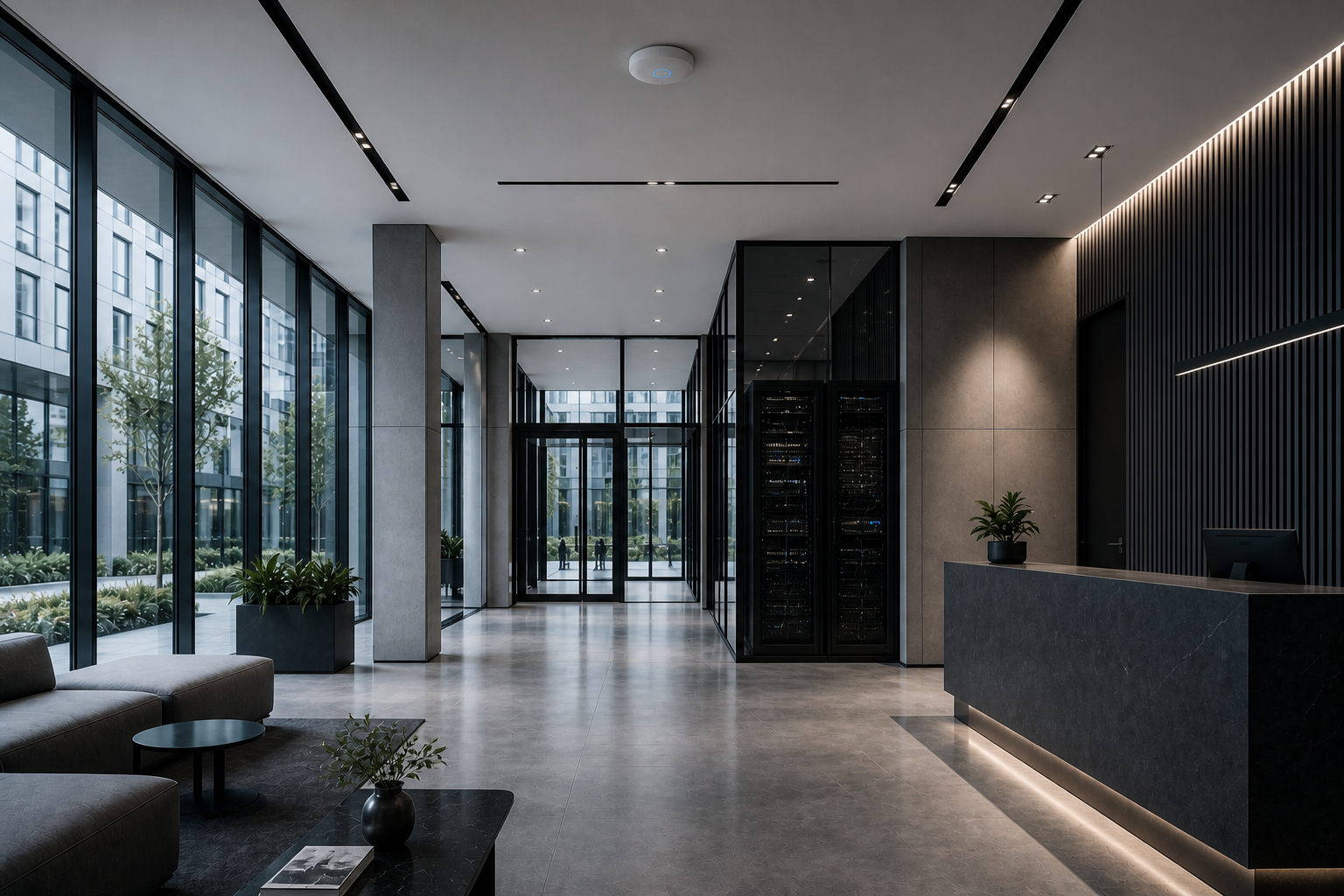
Network infrastructure designed as part of the building — structured for segmentation, secure access, monitoring, remote management and long-term operational stability.
Enterprise architecture, applied to real buildings
Our network designs apply enterprise-grade architectural principles — segmentation, role-based access, redundancy, monitoring and controlled edge security — through platforms appropriate for real buildings and real operations.
The goal is predictable performance, maintainability and lower long-term operational complexity across residential, hospitality and commercial environments.
Independent digital backbone
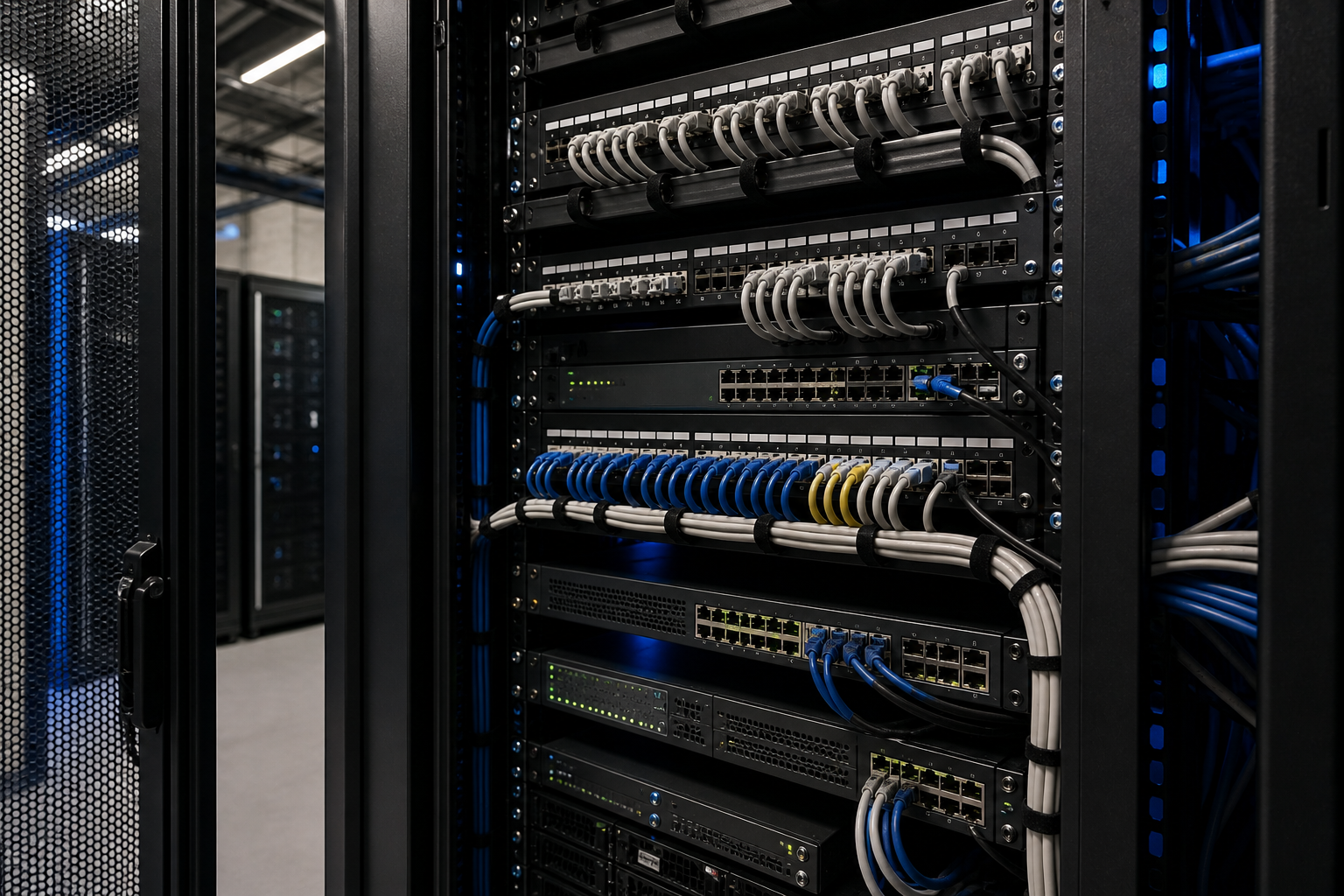
We design and implement complete network environments — including edge gateways, core switching layers, PoE switching infrastructure, wireless access points, structured rack systems and secure remote management — as independent projects or as part of integrated building systems.
Projects may include:
- Dual WAN and ISP failover architecture
- LTE/5G backup connectivity
- VLAN trunking and traffic isolation
- Site-to-site VPN environments
- QoS optimization for VoIP and operational systems
- IoT network segmentation
- Zero-touch provisioning for multi-site rollouts
Network systems are engineered to operate reliably on their own — whether supporting a single commercial space or forming the digital backbone of a multi-building environment.
Predictive Wi‑Fi & camera coverage planning
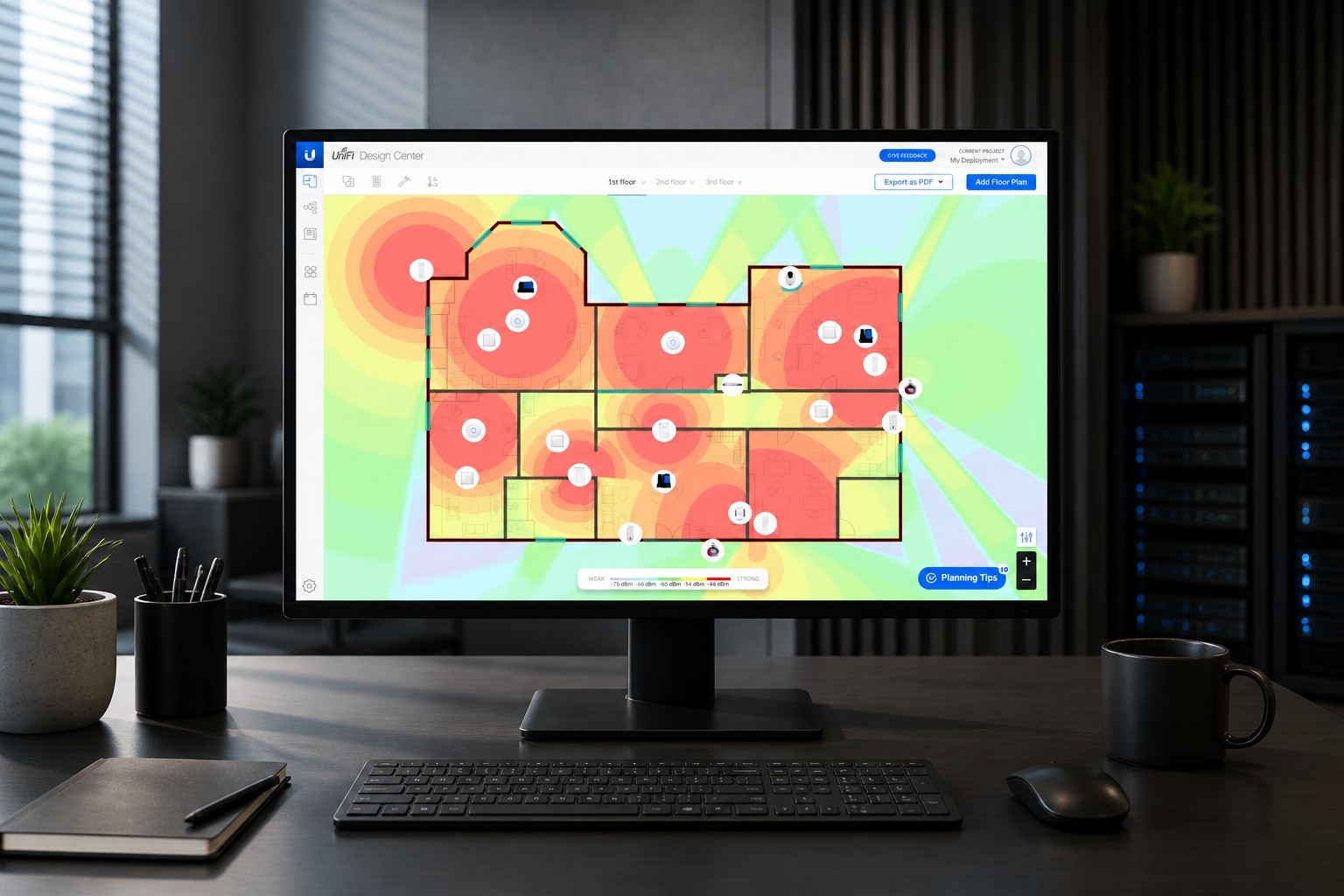
Most network issues start with assumptions: “Wi‑Fi will reach” or “the camera will see the entrance.” We use predictive planning to turn assumptions into measurable design — performed by our engineers as a professional pre-procurement design service before equipment specification is finalized.
- Wi‑Fi coverage planning for guest areas, staff areas and operational zones
- Camera field-of-view planning for entrances, perimeters and critical spaces
- Informed equipment selection and placement before installation
- Clear expectations for performance in real conditions
This approach optimizes both performance and cost — avoiding oversizing, reducing rework, and aligning the final specification with real architectural constraints.
In many projects, this planning workflow is executed using professional planning tools, including UniFi Design Center where appropriate. Clients receive the outcome and design decisions, not a DIY task list.
Unified infrastructure platforms
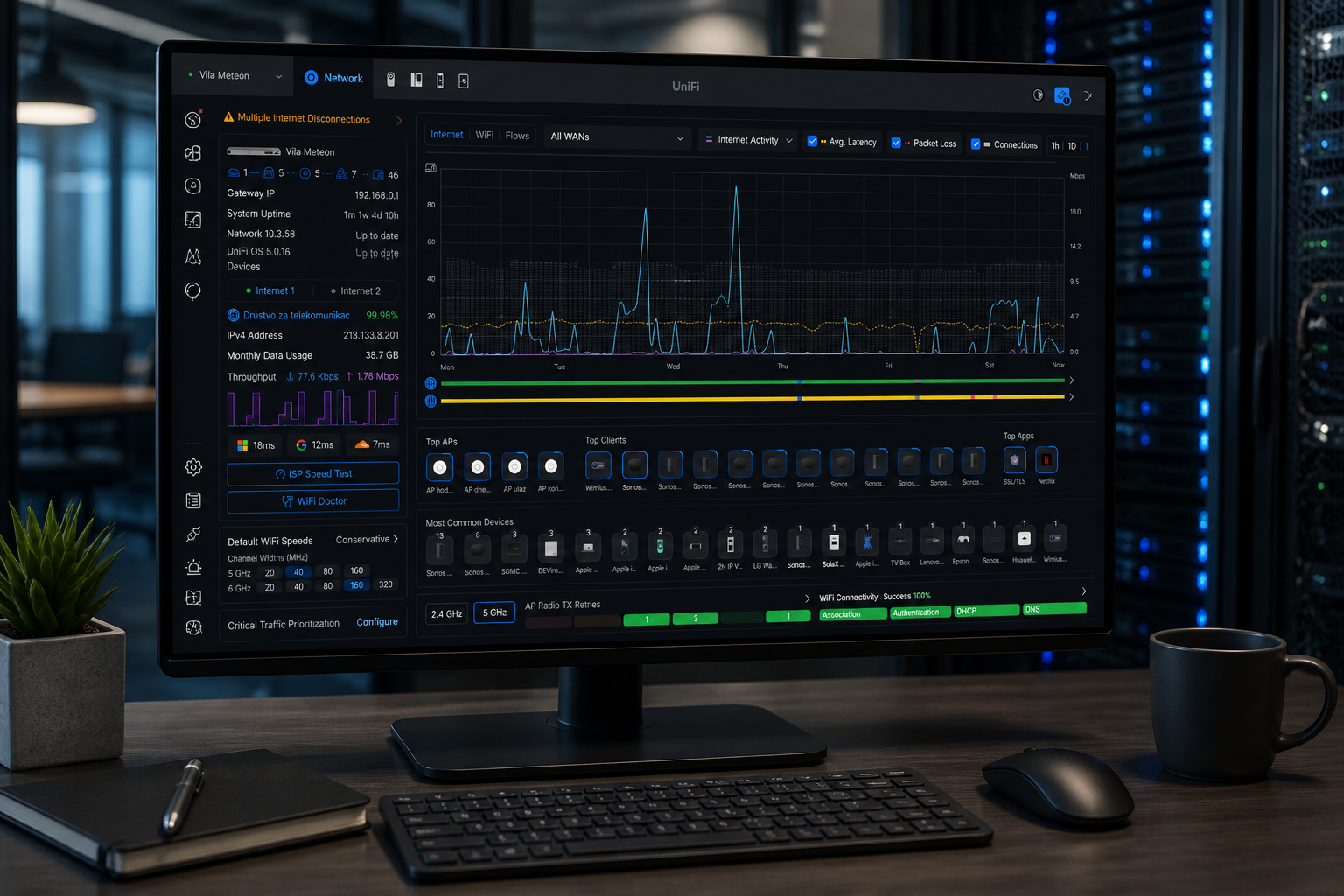
Modern unified infrastructure platforms allow routing, switching, wireless networks, video surveillance and network-based access control systems to operate within a single management layer — either locally hosted or cloud-managed, depending on project requirements.
This reduces fragmentation, improves visibility and simplifies lifecycle maintenance. Our engineering team selects infrastructure platforms based on architectural coherence, scalability and long-term maintainability.
In many residential, hospitality and commercial projects, unified platforms such as UniFi® provide an effective balance between enterprise-grade network logic and operational simplicity.
Where project scale or technical constraints require it, additional routing, WAN aggregation, industrial networking or security platforms can be integrated into the overall architecture.
Security through architecture, not add-ons
Enterprise-level network design isolates user groups, devices and system layers through structured zoning — increasing reliability, simplifying compliance and reducing operational risk.
- Guest networks are isolated from internal operations
- Staff, management and automation systems are separated by VLAN architecture
- Surveillance and CCTV storage operate within controlled security zones
- Edge gateway policies define inbound and outbound traffic behavior
- Management access is protected through secure remote access models
Security is implemented through structured network design — not through isolated firewall adjustments.
Surveillance backbone & retention architecture
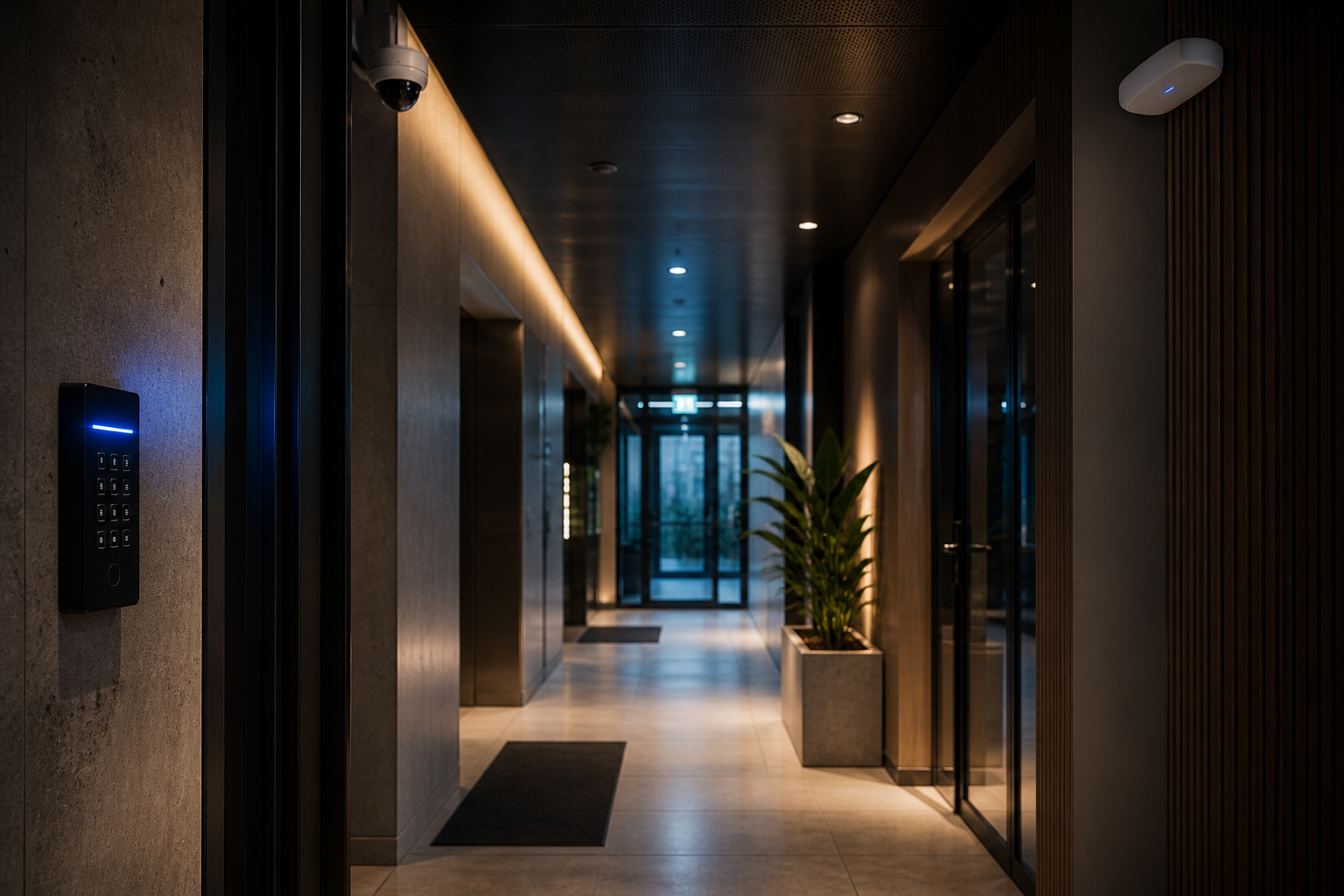
Modern network infrastructure often carries video surveillance and access control systems. Professional deployments treat video and access as structured network services — not standalone installations.
- PoE power budgeting for cameras and access devices
- Dedicated surveillance VLANs
- Controlled recording retention policies
- Secure remote viewing environments
- Local NVR storage combined with optional cloud backup
Retention is policy-driven and aligned with operational needs, local requirements and project-specific risk models.
Multi-site architecture and centralized management
Network infrastructure can extend across single commercial spaces, residential buildings, hospitality properties, office buildings, multi-building developments and remote branches — managed as one coherent environment.
Centralized controllers enable:
- Multi-site monitoring and remote diagnostics
- Configuration synchronization and firmware management
- Consistent security policies across locations
- Scalable expansion without architectural redesign
The same enterprise principles apply regardless of scale — from a single-location business requiring segmented guest Wi‑Fi to complex distributed environments.
Foundation for integrated systems — without dependency
Access control systems, intercoms, surveillance platforms and automation controllers benefit from structured network architecture. However, network infrastructure operates independently and can be delivered as a complete solution on its own.
Network infrastructure can serve as:
- Standalone managed corporate networks
- Secure connectivity layers for commercial tenants
- Dedicated surveillance backbones
- Independent infrastructure projects without automation layers
Our network infrastructure work functions both as a foundational layer and as a complete digital infrastructure solution.
Designed for lifecycle stability
Network architecture is planned for long-term operational continuity — not short-term deployment. Our engineering-first methodology prioritizes predictability, documentation and controlled expansion.
- Predictable system behavior
- Clear documentation and topology mapping
- Structured rack and power design
- Maintainability and upgrade readiness
- Controlled expansion without downtime
Discuss your project
Networks can be delivered as a standalone infrastructure project or designed as part of an integrated building system. We align architecture, operational needs and long-term maintainability.
UniFi® is a registered trademark of Ubiquiti Inc. Automatikon operates independently and selects platforms based on project requirements.